New Roofs Manchester
A New Roof Is a 40-Year Decision — Get It Right
A full roof replacement is one of the most significant investments a Manchester homeowner makes. Done correctly, with the right materials for the property and proper attention to the structure underneath, a new roof won't need replacing in your lifetime. Done wrong — cheap materials, skipped underlay, battens laid green, flashings bodged — and you'll be back to square one within a decade.
Most of the re-roofing work Guardfix carries out in Greater Manchester falls into one of two categories. The first is a genuinely end-of-life roof: slates or tiles that are porous and crumbling, battens that have rotted through, felt underlay that disintegrated years ago. At that point, repair isn't worth considering — the whole lot needs to come off and start fresh. The second is a roof that's had one too many patches: three different roofers, three sets of non-matching slates, ridge mortar that's been repointed four times. Cheaper to start again than keep chasing problems around a deteriorating surface.
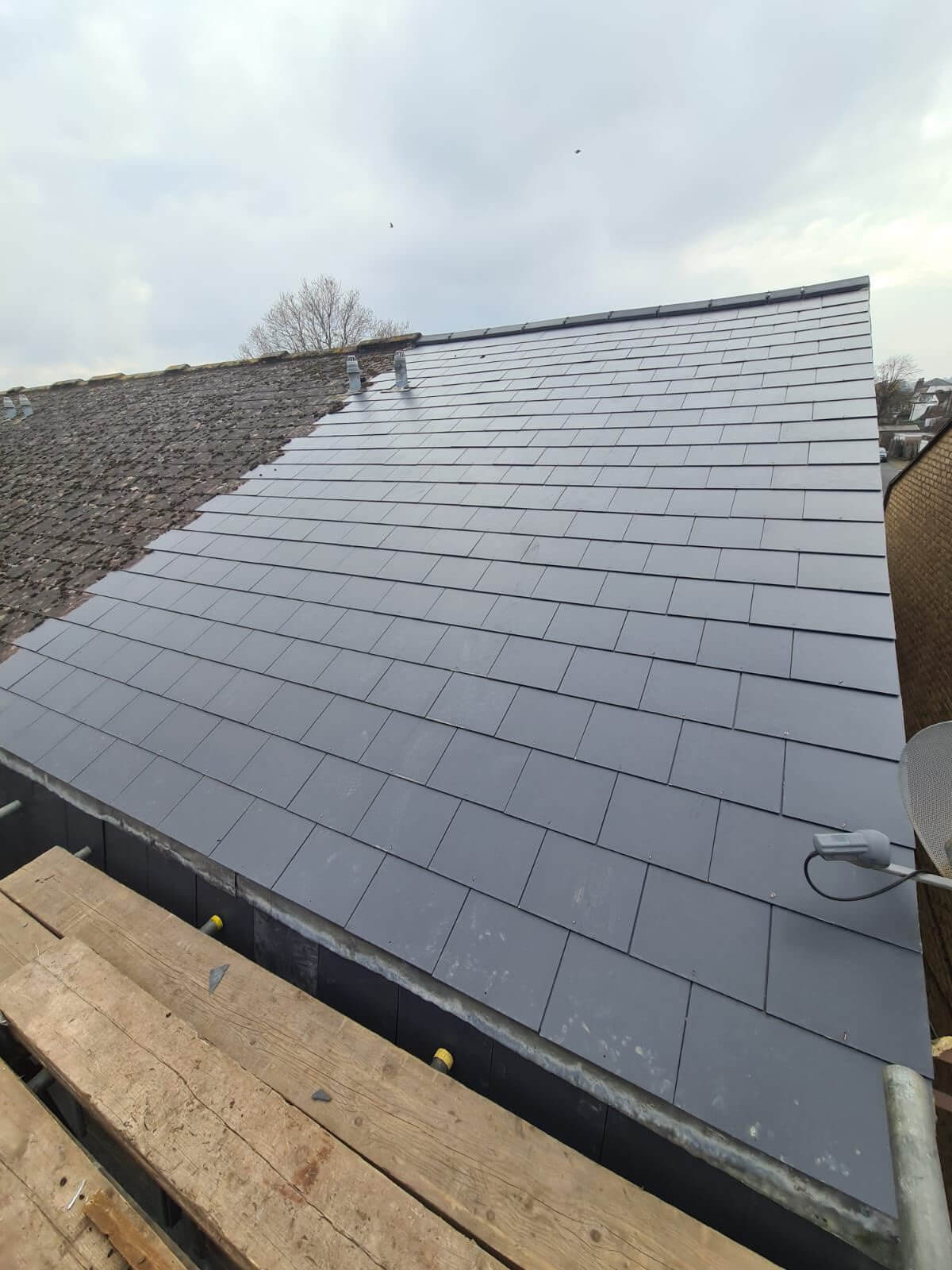
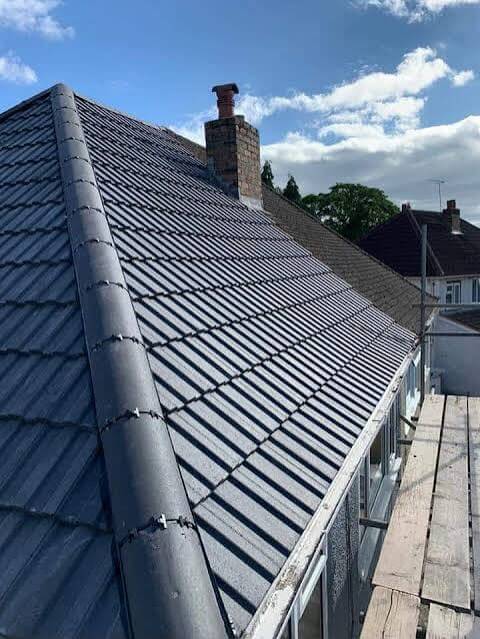
In both cases, the process is the same. We strip the roof completely, inspect the rafters and decking for rot or movement, replace any compromised timber, lay new breathable membrane, batten, and install the new tile or slate course from the eaves up. Ridge, hip, valley, and all flashings are completed before we leave the roof. Every new roof installation is backed by a 10-year written guarantee on workmanship.
New Roof?
Concrete Tile, Clay Tile, or Natural Slate — Which Is Right for Your Manchester Property?
This is the question that matters most before any new roof quote is produced, and the honest answer depends on the property, not just the budget.
Concrete tiles are the most common roofing material on Manchester's post-war housing stock — the semis and detached houses built between the 1930s and 1980s. They're durable, relatively affordable, and available in a wide range of profiles and colours. A correctly installed concrete tile roof will last 40–60 years. The downside is weight — concrete tiles are heavier than slate, and on some older properties the roof structure needs checking before a like-for-like replacement goes on.
Clay tiles are the premium end of the tile market — more expensive than concrete but with a longer lifespan and a colour that stays truer over decades. Clay doesn't absorb water the way concrete does, which means it handles Manchester's wet climate without the surface degradation you eventually see on older concrete tiles. On period properties where the original clay pantiles or plain tiles are beyond repair, we source matching clay to preserve the character of the building.
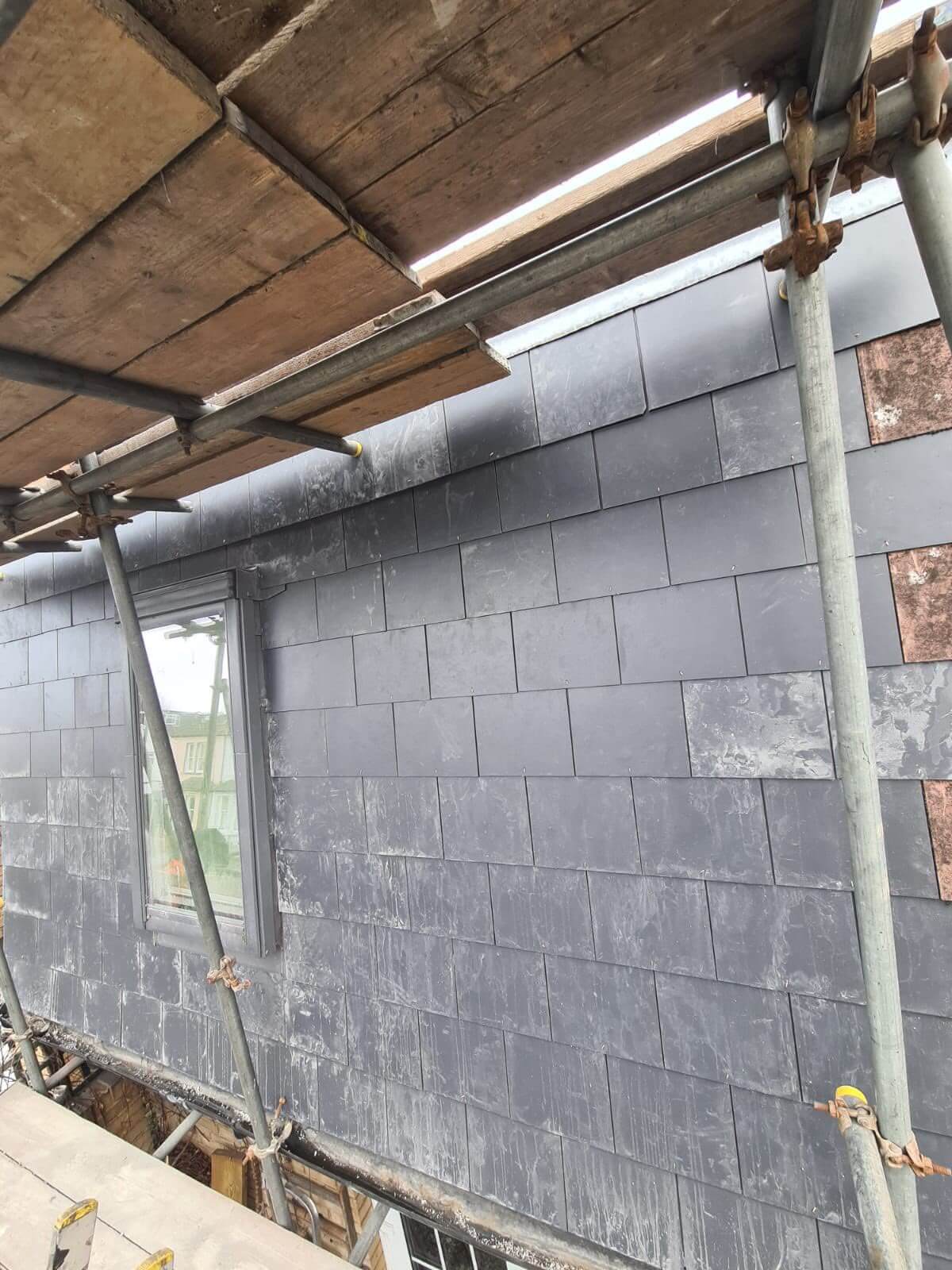
Natural Welsh slate is the material Greater Manchester's Victorian and Edwardian terraces were built with, and on those properties it's almost always the right replacement choice. Natural slate lasts 80–100 years on a well-maintained roof — some of the slates we strip off during a re-roof have been there since the 1890s and are still structurally sound; it's the fixings and battens that fail, not the slate itself. It costs more upfront than concrete tile and significantly more than artificial slate — but on a Victorian terrace it's the only material that genuinely belongs, and the lifespan makes it economically sound over a 30-year view.
We'll give you a straight recommendation for your specific property before any quote is produced.
Areas We Cover
Guardfix Roofing carries out new roof installations:
Whether you're in Manchester City Centre, Didsbury, Chorlton, Salford, Eccles, Worsley, Stockport, Cheadle, Bramhall, Trafford, Sale, Altrincham, Stretford, Urmston, Oldham, Chadderton, Failsworth, Rochdale, Middleton, Heywood, Bury, Radcliffe, Prestwich, Bolton, Horwich, Westhoughton, Wigan, Leigh, Atherton, Tameside, Ashton-under-Lyne, Denton, Stalybridge or anywhere in between.
We're on your doorstep. Call 07487 617146 for a free quote.

Five Signs Your Manchester Roof Needs Replacing, Not Repairing
Most roofers won't tell you this — but not every roof problem needs a full replacement. Here's how to tell when it genuinely does.
You've had three or more repairs in the last five years
When the same roof keeps producing new leak points — different locations, different causes — it's rarely bad luck. It's a roof that's reached the end of its serviceable life and is failing progressively across the whole surface. Each repair fixes one problem while two more develop. At that point the cumulative repair cost over another five years almost always exceeds the cost of replacement.
The battens are rotten
Battens are the horizontal timber strips the slates or tiles hang on. On Manchester's older housing stock they're frequently original — which means they've been up there for 80 to 100 years and have absorbed decades of moisture through the underlay. Rotten battens can't hold fixings, which means tiles and slates work loose even when the surface material itself is still sound. There's no repair for rotten battens — the whole roof comes off.
The felt underlay has failed
Modern breathable membrane is designed to last the lifetime of the roof. The traditional bitumen felt used on roofs up until the 1990s has a lifespan of around 30–40 years. Once it splits and sags between the battens, water that gets past the tiles has nothing to stop it reaching the roof deck. You often won't know the underlay has failed until water appears on the ceiling — by which point it's been getting in for months.
Widespread slate or tile deterioration
Individual slipped or cracked slates are a repair job. When the deterioration is spread across the whole roof — slates becoming porous and soft, tiles spalling at the edges, widespread hairline cracking — it's a material that's reached the end of its life. No amount of individual replacements will stop a roof that's deteriorating uniformly across the surface.
The ridge mortar has been repointed more than twice
Ridge mortar on Manchester's Victorian housing stock typically needs its first repoint after 40–50 years. A second repoint is reasonable. By the third repoint, the question isn't whether the ridge needs doing again — it's whether the rest of the roof is worth spending money on. A ridge that keeps failing is usually telling you the roof underneath it is in worse shape than it looks.
What's Included in a Guardfix New Roof Installation
Your Roofing Questions Answered
The honest indicators are: three or more repairs in five years with new leak points appearing each time, rotten battens that can't hold fixings, underlay that has failed and is letting water through to the deck, or widespread surface deterioration across the whole roof rather than isolated damage. If you're unsure, we'll inspect and give you a straight opinion — we don't push for replacement when repair is genuinely the right call.
A standard three-bedroom semi typically takes two to four days for the full installation depending on roof size, complexity, and whether any structural timber needs replacing. We'll give you a realistic timeline before work starts. We don't rush a roof to hit an arbitrary schedule — the fixing frequencies and lap details that make a roof last don't allow for shortcuts.
In most cases no. Replacing a roof with the same or similar materials on a domestic property falls under permitted development. Exceptions apply to listed buildings, properties in conservation areas, and roofs where the replacement material would significantly change the appearance of the building. We'll flag this if it applies during our initial survey.
Mortar bedded ridge uses sand and cement to bed the ridge tiles — the traditional method used on virtually every roof in Greater Manchester until recently. It works well but requires repointing every 20–30 years as the mortar deteriorates. Dry ridge systems use aluminium unions and mechanical fixings to secure ridge tiles without mortar — they're more expensive upfront but eliminate the maintenance cycle and give a cleaner finish. We offer both and will recommend which suits the property.
On a full re-roof we're typically replacing everything, so matching isn't usually required. Where we're replacing a section rather than the whole roof, we carry natural Welsh slate in the most common sizes and can source specific dimensions. On very old properties with unusual slate sizes, we can often salvage sound slates from a rear or less visible slope to use on the visible front elevation.
A full re-roof on a standard three-bedroom semi in concrete or clay tile runs £6,000–£9,500. In natural Welsh slate, £8,000–£14,000 depending on roof size and pitch. The main variables are roof area, pitch, whether scaffolding is required, and how much structural timber needs replacing once the old roof is stripped. We give a fixed written quote after the roof survey — the figure doesn't change on the day.
Any Questions?
Ask Us
More Roofing Services We Offer In Manchester
From a single slipped slate to a full roof replacement — we're the Manchester Roofers that handle every roofing job across Greater Manchester. 27 years in the trade means no guesswork, no unnecessary work, and no nasty surprises on the bill.


Get a Free New Roof Survey in Manchester
Not sure whether your roof needs replacing? We'll come out, inspect it properly, and give you a straight answer — repair or replace, and the realistic cost of each. No pressure, no obligation.